State vs Federal Charges Miami: How Your Defense Changes
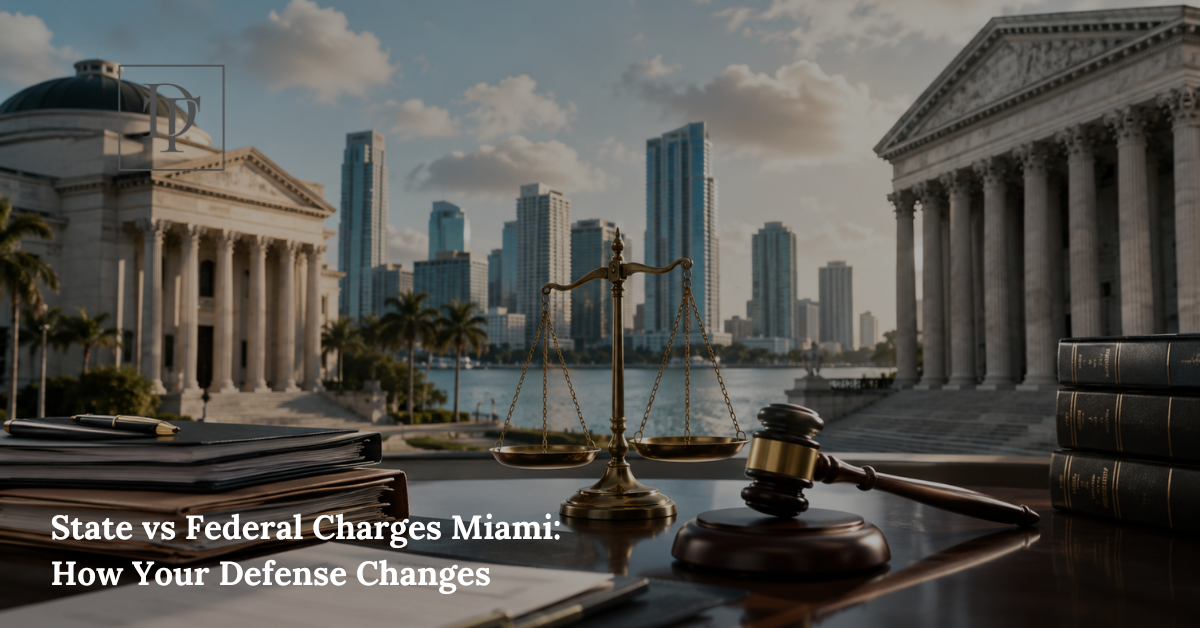
Understanding state vs federal charges Miami cases is important because the court handling your case can completely change the defense strategy, the prosecutors involved, the rules of procedure, and the potential penalties. A criminal accusation in Miami may start with a local arrest, but depending on the facts, the case may remain in Florida state court or move into the federal system.
The difference is not just technical. State and federal cases often involve different agencies, different charging standards, different sentencing exposure, and different negotiation dynamics. A person accused of a crime in Miami needs to know where the case is being prosecuted and why that matters.
At Dustin Tischler Law, we defend clients facing criminal charges in Miami by reviewing the facts, identifying the court system involved, and building a defense strategy that fits the specific risks of the case.
Why the Court System Matters in a Miami Criminal Case
A criminal case in Miami may be handled in Florida state court or federal court. The court system determines who prosecutes the case, which rules apply, what penalties may be available, and how the defense should approach the evidence.
Florida state cases are typically prosecuted by state prosecutors and handled through Florida trial courts. Florida circuit courts hear criminal felony cases, while county courts handle many lower-level matters. The Florida Courts system explains that circuit courts hear criminal felonies and other major categories of cases.
Federal criminal cases are different. According to the United States Courts, federal criminal cases typically involve the U.S. Attorney and may involve a grand jury at the beginning of the case. The U.S. Attorney represents the United States in most federal criminal prosecutions.
That distinction affects the defense from day one.
State vs Federal Charges Miami: The Main Difference
The main difference between state and federal charges is the law the person is accused of violating.
A state charge usually involves an alleged violation of Florida criminal law. These cases are commonly handled in Florida courts and may involve local police departments, county prosecutors, and state-level criminal statutes.
A federal charge involves an alleged violation of federal law. These cases are prosecuted by the United States Attorney’s Office and may involve federal agencies such as the FBI, DEA, ATF, IRS, Homeland Security Investigations, or other federal authorities.
Florida circuit courts handle felony criminal cases at the state level.
Federal criminal cases are handled in the federal court system, where the U.S. Attorney represents the federal government.
Common Examples of Florida State Criminal Charges
Many criminal accusations in Miami begin and remain in state court. These cases are often based on alleged violations of Florida statutes and may involve local police investigations.
State charges may include:
- DUI
- Drug possession
- Domestic violence
- Theft
- Robbery
- Assault or battery
- Burglary
- Probation violations
- Resisting arrest
- Weapons charges under Florida law
- Violent crime allegations
- Certain fraud or white collar accusations
If the case involves local conduct, local witnesses, and a violation of Florida law, it may stay in state court. For example, many theft, robbery, assault, and battery allegations are handled by Florida prosecutors unless a federal issue is also involved.
If your case involves accusations of assault, robbery, or other force-related allegations, the defense may overlap with violent crime charges in Miami.
Common Federal Criminal Charges in Miami
Federal cases often involve conduct that crosses state lines, affects federal programs, involves federal agencies, or falls under specific federal criminal laws.
Examples of federal charges may include:
- Drug trafficking
- Firearms offenses
- Wire fraud
- Mail fraud
- Bank fraud
- Healthcare fraud
- Money laundering
- Cybercrime
- Immigration-related offenses
- Federal conspiracy charges
The U.S. Attorney’s Office is responsible for prosecuting most federal criminal cases.
If the accusation involves complex financial conduct, false billing, business records, or alleged fraud, the case may also connect with white collar crime charges in Miami.
Why Some Miami Cases Become Federal
A case does not become federal simply because it is serious. Some serious cases remain in state court. Others become federal because of the type of conduct alleged or the agencies involved.
A Miami criminal case may become federal when:
- Federal agents investigated the case
- The alleged conduct crossed state lines
- The case involves federal property or federal programs
- The accusation involves large-scale drug trafficking
- The case involves firearms under federal law
- The conduct involves interstate wire transfers, banking, or online communications
- Prosecutors allege a larger conspiracy
- The case involves immigration, customs, or border-related issues
For example, a simple drug possession case may stay in state court, while a larger trafficking investigation involving federal agents or interstate activity may become federal. If your case involves narcotics allegations, search warrants, or distribution claims, the defense may need to consider both federal exposure and drug crimes in Miami.
How Your Defense Strategy Changes
The defense strategy changes because state and federal cases do not move the same way.
In a Florida state case, the defense may focus on local police reports, body camera footage, witness statements, probable cause for arrest, search and seizure issues, and possible negotiation with state prosecutors.
In a federal case, the defense may involve a broader investigation. Federal prosecutors may have already collected financial records, digital evidence, search warrant materials, agency reports, witness statements, or grand jury evidence before an arrest happens.
Federal cases may also involve different sentencing risks, including federal sentencing guidelines, mandatory minimums, enhancements, supervised release, and conspiracy allegations.
That means the defense must be built around the system handling the case. A strategy that works in a state-level DUI, theft, or battery case may not be enough in a federal fraud, drug trafficking, firearms, or conspiracy case.
Evidence May Look Different in State and Federal Cases
The type of evidence can also change depending on the court system.
State cases may involve:
- Police reports
- Body camera footage
- 911 calls
- Local witness statements
- Store surveillance
- Arrest reports
- Physical evidence collected by local officers
Federal cases may involve:
- Search warrants
- Federal agent reports
- Bank records
- Phone extractions
- Emails
- Business records
- Digital data
- Informant evidence
- Co-defendant statements
- Financial records
- Evidence collected across multiple jurisdictions
If the case involves online activity, computer records, digital accounts, or electronic communications, it may also connect with cybercrime charges in Miami.
Can the Same Case Involve Both State and Federal Exposure?
Yes. In some situations, the same conduct may create exposure under both Florida law and federal law. That does not mean every case will be prosecuted in both systems, but it does mean the defense should evaluate the full risk.
This can happen in cases involving drugs, firearms, fraud, cybercrime, immigration, or larger investigations involving multiple agencies.
A local arrest in Miami does not always mean the case will stay local. If federal agents are involved, if subpoenas are issued, or if the facts connect to federal statutes, the defense should take that possibility seriously from the beginning.
What to Do If You Are Facing State or Federal Charges in Miami
If you are facing criminal charges and are unsure whether the case is state or federal, do not make assumptions.
You should:
- Avoid speaking to law enforcement without an attorney
- Keep all court papers, subpoenas, and notices
- Do not contact witnesses or co-defendants
- Do not delete messages, emails, or records
- Preserve documents that may help your defense
- Contact a criminal defense attorney as early as possible
If you have already been convicted and believe legal errors affected your case, you may need to speak with a Miami criminal appeals lawyer.
Speak With a Miami Criminal Defense Attorney

The difference between state and federal charges can affect the prosecutor, court system, evidence, penalties, and defense strategy. Whether your case is in Florida state court, federal court, or involves risk in both systems, early legal guidance can help protect your rights.
Dustin Tischler Law represents clients facing serious criminal accusations in Miami and throughout South Florida. Contact the firm today to discuss your case and begin building a defense strategy based on the facts.
👉 Contact Miami Federal Criminal Defense Attorney Dustin Tischler today to protect your future.